
Digital Marketing for Small Businesses: A Complete Guide to Growing Business Online
Intro..
Have you ever wondered why some small businesses always seem busy while others struggle to find customers? The difference isn’t always the quality of their products—it’s often how easily customers can find them online. Today, people search on Google, browse social media, and read reviews before making a purchase. If your business isn’t visible online, you’re likely missing valuable opportunities.
What Is Digital Marketing?
Digital marketing is the practice of promoting products and services using online channels such as search engines, websites, social media, email, and digital advertising. Unlike traditional marketing, digital marketing allows businesses to target specific audiences, measure results, and adjust strategies based on real-time data.
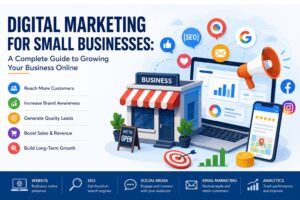
Why Digital Marketing Matters for Small Businesses
Small businesses often operate with limited budgets, making every marketing dollar important.
- So, where should you start?
- Is SEO really worth the effort?
- What if your marketing budget is limited?
By using the right digital marketing strategies, small businesses can compete effectively regardless of their size.
Essential Digital Marketing Strategies
1. Build a Professional Website
Your website is your digital storefront. A well-designed website should:
- Load quickly
- Be mobile-friendly
- Have clear navigation
- Include contact information
- Showcase products or services
- Feature customer testimonials
- Include clear calls to action
If your website looks professional it creates trust and encourages visitors to become customers.
2. Optimize for Search Engines (SEO)
Search Engine Optimization (SEO) helps your website appear higher in search engine results.
- Use relevant keywords
- Create high-quality content
- Optimize page titles and meta descriptions
- Improve website speed
- Build quality backlinks
- Publish helpful blog articles regularly
3. Leverage Social Media Marketing
Social media platforms allow businesses to connect directly with their audience.
- Educational content
- Behind-the-scenes updates
- Success stories
- Product demonstrations
- Industry tips
- Promotional offers
Consistency is more important than posting frequently. Focus on creating valuable content that encourages engagement.
- In my experience, many small business owners think they need to be active on every social media platform. That’s rarely necessary. It’s usually more effective to post consistently on one or two platforms than to spread yourself too thin.
- An effective online strategy helps local businesses reach more customers, build trust, and increase sales without spending a fortune.
4. Invest in Content Marketing
Content marketing helps establish your business as an authority in your industry.
- Blog posts
- How-to guides
- Videos
- Infographics
- Case studies
- FAQs
Helpful content builds trust and improves website search engine rankings.
5. Build an Email Marketing Strategy
Email marketing remains one of the highest-performing digital marketing channels.
- Welcome new subscribers
- Share company updates
- Announce new products
- Offer exclusive discounts
- Send educational newsletters
- Encourage repeat purchases
Personalized emails often generate better engagement and customer loyalty.
6. Use Local SEO
If your business serves a specific location, local SEO is essential.
- Create and maintain your business profile
- Encourage customer reviews
- Keep your business information accurate
- Use location-based keywords
- Publish locally relevant content
Local SEO helps nearby customers discover your business when searching online.
7. Run Paid Advertising
Paid advertising can deliver quick results if managed effectively.
- Search engine ads
- Social media ads
- Display advertising
- Video advertising
- Remarketing campaigns
Start with a small budget, monitor performance, and optimize your campaigns based on results.
Common Mistakes Small Businesses Should Avoid
- Ignore SEO
- Post inconsistently on social media
- Focus only on selling instead of providing value
- Neglect website optimization
- Fail to measure marketing performance
- Ignore customer feedback
- Lack a clear marketing strategy
Measuring Your Success
Track key performance indicators:
- Website traffic
- Search engine rankings
- Conversion rate
- Cost per lead
- Email open rate
- Social media engagement
- Customer acquisition cost
- Return on investment (ROI)
Regular analysis helps you identify what’s working and where improvements are needed.
The Future of Digital Marketing for Small Businesses
Digital marketing continues to evolve with advancements in artificial intelligence, voice search, automation, and personalized customer experiences. Small businesses that embrace these innovations while maintaining a customer-focused approach will be better positioned for long-term success.
Conclusion
Growing a small business online doesn’t happen overnight, and that’s okay. You don’t need a huge budget or a team of marketing experts to get started. Focus on one strategy, keep learning, and improve as you go. Consistent effort over time often delivers better results than trying to do everything at once.