
How to Grow Your Brand Organically In 2026:
In today’s competitive digital world, growing a brand is not just about spending money on advertisements. While paid marketing can provide quick results, brand growth strategies helps build long-term trust, loyal customers, and sustainable success.
Whether a startup, freelancing, local business, or an established company, focusing on organic growth can significantly increase your online presence without constantly increasing your marketing budget.
Learn practical strategies that help businesses grow naturally and build a strong brand that customers genuinely trust.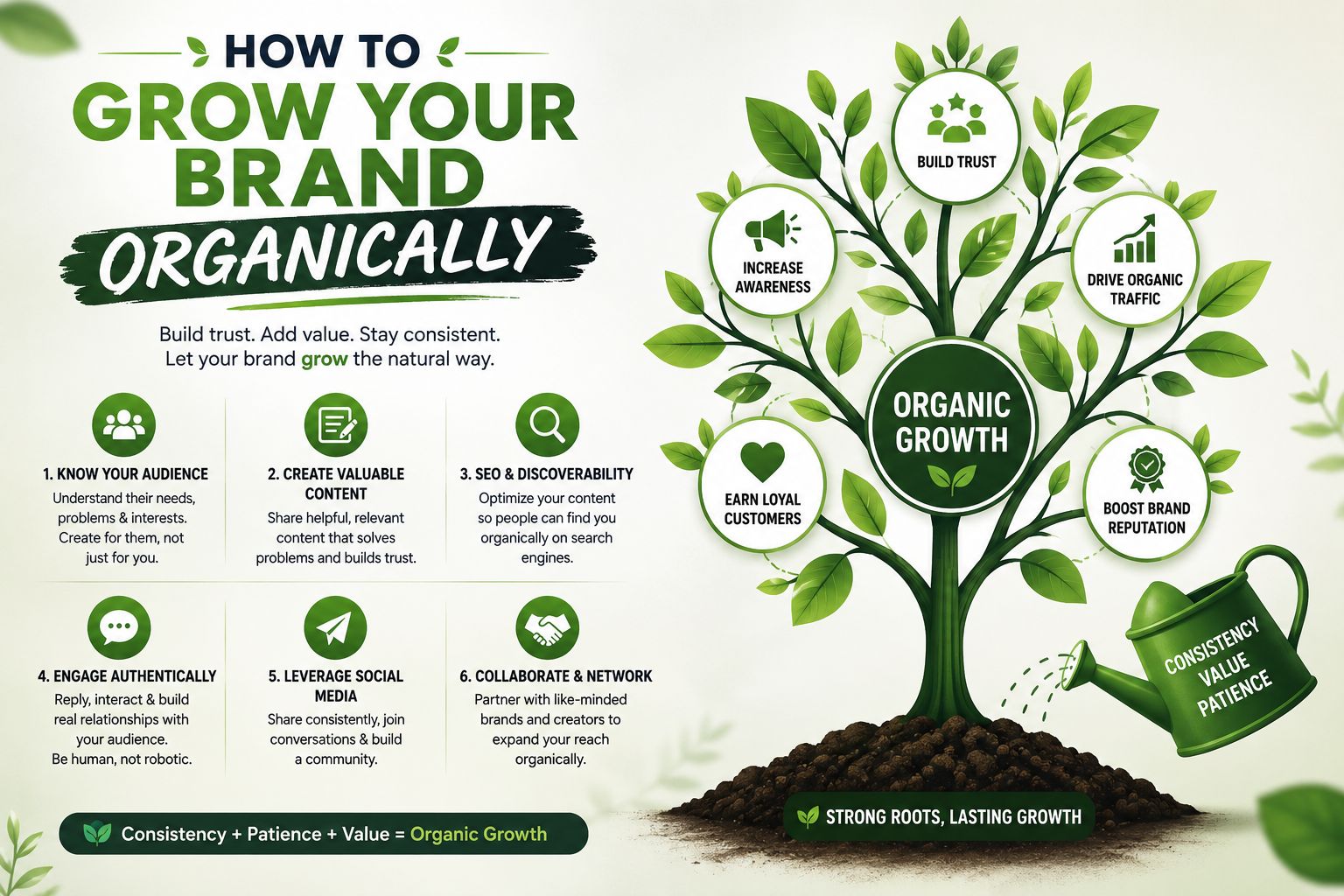
What Does Organic Brand Growth Mean?
Organic brand growth refers to increasing your brand’s visibility, audience, and customer base through non-paid marketing efforts.
Instead of paying for every visitor or customer, organic growth comes from:
- Search Engine Optimization (SEO)
- Valuable content creation
- Social media engagement
- Customer referrals
- Email marketing
- Positive customer experiences
- Word-of-mouth marketing
Why Organic Growth Matters ?
Businesses that focus on organic marketing often experience:
- Higher customer trust
- Better brand credibility
- Lower customer acquisition costs
- Long-term website traffic
- Improved search engine rankings
- More repeat customers
- Stronger community engagement
Although organic growth takes time, the results usually last much longer than paid campaigns.
1. Understand Your Target Audience
The first step to growing your brand organically is knowing exactly who your ideal customers are.
- What problems do they face?
- What are they searching for online?
- Which social media platforms do they use?
- What type of content do they enjoy?
- What motivates them to make a purchase?
Creating customer personas helps you produce content that directly addresses their needs.
2. Build a Strong Brand Identity
People remember brands that have a consistent identity.
- A professional logo
- Consistent color palette
- Clear brand voice
- Memorable tagline
- Professional website
- Consistent messaging across platforms
3. Create High-Quality Content
Content is the foundation of organic marketing.
Useful content attracts visitors, answers questions, and establishes your authority.
Create different types of content:
Blog Posts
Write informative articles that solve customer problems.
Examples:
- How-to guides
- Industry trends
- Tutorials
- Case studies
- Beginner guides
Videos
Video content generates higher engagement across most platforms.
Ideas include:
- Product demonstrations
- Behind-the-scenes videos
- Customer testimonials
- Educational content
Infographics
Visual content is highly shareable and easy to understand.
4. Invest in SEO
Search Engine Optimization helps your website appear in Google search results.
Optimize On-Page SEO
Include your keyword naturally in:
- Page title
- Meta description
- URL
- Headings
- First paragraph
- Image alt text
Avoid keyword stuffing.
Improve Website Speed
A slow website can reduce rankings and increase bounce rates.
Optimize:
- Images
- Hosting
- Caching
- Code
- Mobile performance
Mobile Optimization
More than half of internet users browse on mobile devices.
Ensure your website:
- Loads quickly
- Has responsive design
- Uses readable fonts
- Features easy navigation
5. Be Active on Social Media
Social media isn’t just for promotion.
It’s about building relationships.
Post consistently:
- Educational posts
- Tips
- Customer stories
- Polls
- Reels
- Industry updates
- Behind-the-scenes content
Respond to comments and messages promptly to build stronger connections.
6. Focus on Building a Community
Successful brands don’t just sell products.
They create communities.
Encourage people to:
- Share their experiences
- Ask questions
- Leave reviews
- Join discussions
- Participate in challenges
When customers feel connected, they naturally promote your brand.
7. Encourage User-Generated Content
User-generated content (UGC) is one of the most powerful forms of organic marketing.
Examples include:
- Customer reviews
- Product photos
- Testimonials
- Social media mentions
- Video reviews
People trust real customers more than advertisements.
8. Build an Email List
Email marketing remains one of the highest ROI marketing channels.
Offer something valuable, such as:
- Free guides
- Templates
- Discounts
- Newsletters
- Checklists
Send useful emails instead of constant sales pitches.
Good email content includes:
- Tips
- Industry news
- Product updates
- Exclusive offers
9. Collaborate with Other Brands
Partnerships help you reach new audiences organically.
Collaborate through:
- Guest blogging
- Podcast interviews
- Webinars
- Instagram Lives
- YouTube collaborations
Choose partners whose audience aligns with your target market.
10. Deliver Outstanding Customer Service
Happy customers become your best marketers.
Provide:
- Quick responses
- Friendly support
- Easy returns
- Helpful resources
- Personalized experiences
Excellent service leads to referrals and repeat business.
11. Collect and Showcase Customer Reviews
Positive reviews increase trust and improve conversion rates.
Encourage satisfied customers to leave reviews on:
- Google Business Profile
- Trustpilot
- Industry-specific review platforms
Display testimonials prominently on your website.
12. Stay Consistent
Organic growth requires patience.
Don’t expect overnight success.
Maintain consistency in:
- Publishing content
- Social media posting
- SEO optimization
- Customer engagement
- Email marketing
Small improvements every week lead to significant growth over time.
Common Mistakes to Avoid
Avoid these common errors:
- Publishing low-quality content
- Ignoring SEO
- Posting inconsistently
- Focusing only on selling
- Not engaging with followers
- Ignoring customer feedback
- Giving up too early
Organic growth is a long-term investment.
Best Free Tools for Organic Brand Growth
Here are some excellent free tools:
| Tool | Purpose |
|---|---|
| Google Search Console | SEO Performance |
| Google Analytics | Website Analytics |
| Canva | Graphic Design |
| ChatGPT | Content Ideas |
| Ubersuggest | Keyword Research |
| AnswerThePublic | Content Research |
| Buffer | Social Media Scheduling |
| Grammarly | Content Editing |
Organic Growth Strategy Checklist
Use this checklist to stay on track:
- Define your target audience
- Build a professional website
- Create valuable content
- Optimize for SEO
- Stay active on social media
- Build an email list
- Encourage customer reviews
- Engage with your audience
- Monitor website analytics
- Improve continuously
Final Thoughts
Growing your brand organically is one of the most effective ways to build long-term success. While it requires patience and consistency, the rewards are substantial: increased trust, stronger customer relationships, sustainable website traffic, and a loyal community that supports your business.
Instead of chasing quick wins through constant advertising, focus on delivering value, solving real problems, and engaging authentically with your audience. Over time, these efforts will strengthen your brand and create a lasting competitive advantage.
FAQs (Frequently Asked Questions)
Organic brand growth refers to increasing your brand’s visibility, audience, and customer base without relying heavily on paid advertising. It focuses on content marketing, SEO, social media engagement, and customer relationships.
Organic marketing builds long-term trust, improves search engine rankings, reduces customer acquisition costs, and creates sustainable business growth.
Some of the most effective strategies include SEO, content marketing, social media engagement, email marketing, community building, influencer collaborations, and user-generated content.
SEO increases your website’s visibility in search engines, attracts qualified traffic, improves credibility, and generates consistent leads over time.
Yes. High-quality blogs, videos, podcasts, newsletters, and educational content continue to be one of the strongest drivers of organic traffic and brand authority.
The best platform depends on your audience. LinkedIn works well for B2B, Instagram and TikTok for visual brands, YouTube for educational content, and X or Threads for real-time engagement.